
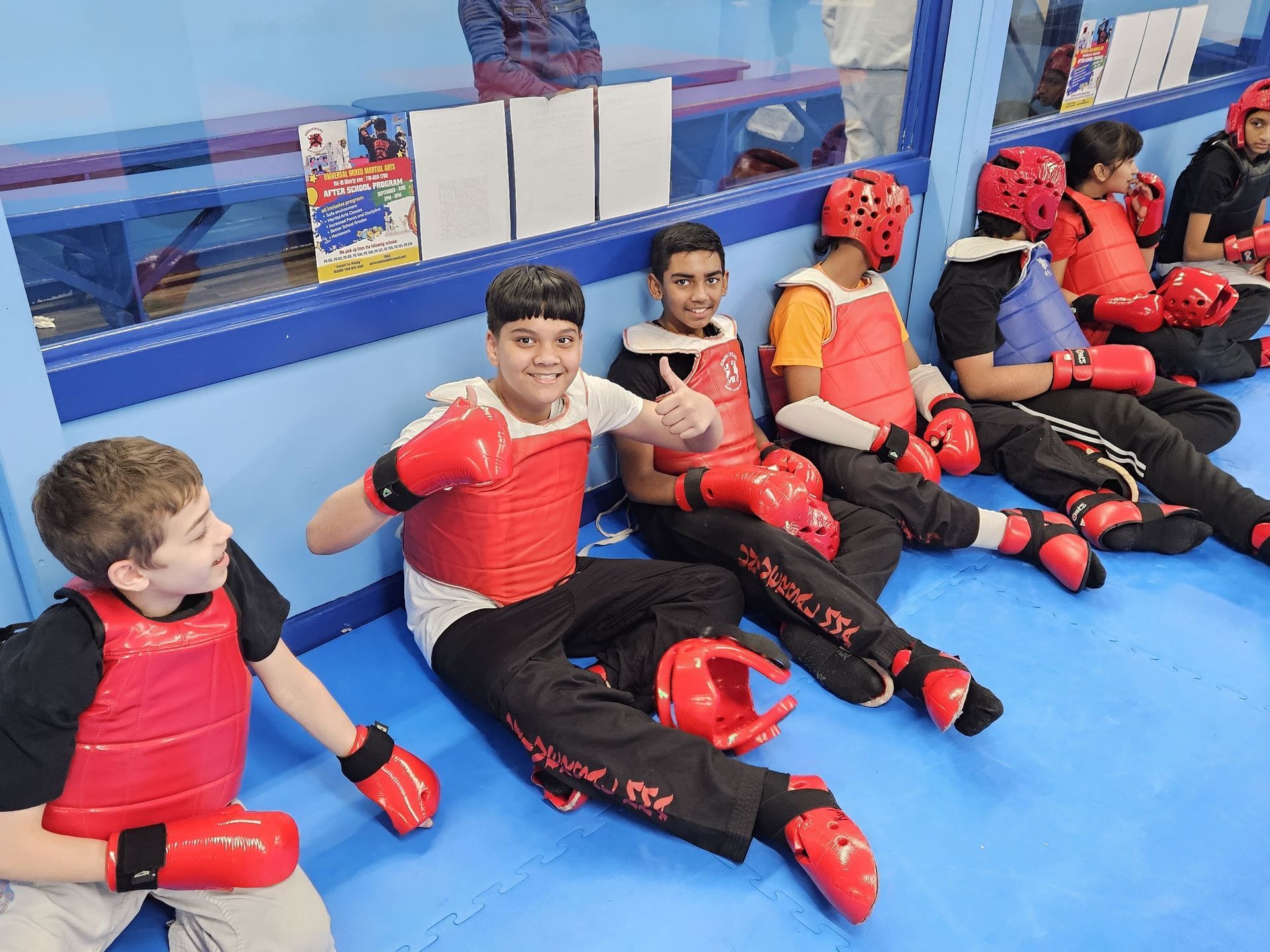
Confidence is not something kids either have or lack, it is something we build, one practice at a time.
In South Richmond Hill, we hear the same concerns from families again and again: confidence is slipping, focus is getting harder, and social pressure feels heavier than it used to. Youth Mixed Martial Arts gives kids and teens a place to grow those skills in a way that feels real, not forced, because progress is visible and earned.
We do not treat confidence as a motivational slogan. We treat it like a trainable skill. When your child learns how to stand correctly, breathe through nerves, listen under pressure, and keep trying after a mistake, confidence starts showing up everywhere else, too.
Youth Mixed Martial Arts also meets kids where our neighborhood is: diverse, busy, and full of energy. Families want a program close to home that is structured, safe, and positive. Our approach is built around that reality, with clear expectations and a supportive training culture.
What confidence really looks like in Youth Mixed Martial Arts
When people say confidence, most imagine a loud personality or a kid who always speaks first. We see a different kind of confidence, the kind that shows up in everyday choices. It is the student who raises a hand in class, the teen who stops apologizing for taking up space, or the kid who can say no without getting rattled.
In Youth Mixed Martial Arts, confidence comes from evidence. Kids feel capable because they practice skills that work, and they can track improvement week to week. That matters, especially for students who feel stuck in sports, school, or social groups where progress is not as clear.
There is also a calm confidence that comes from learning boundaries. When your child understands distance, posture, and how to protect personal space, the world feels less random. That steady feeling is a big deal for many families in South Richmond Hill.
Why a consistent regimen changes how kids carry themselves
A big part of confidence is reliability: doing what you said you would do, even when it is not convenient. A structured training schedule teaches that without needing long lectures at home. When kids train consistently, the small habits stack up.
Training two to three times per week gives your child repeated chances to practice focus, effort, and self-control. Over time, that routine supports better decision-making outside the gym, because kids get used to planning and showing up. Families often notice fewer arguments about responsibilities because the rhythm of training reinforces the idea that commitments matter.
This is one reason Youth Mixed Martial Arts Richmond Hill families stick with it. Confidence grows when kids realize they can handle a routine and improve inside it, even when they start as complete beginners.
What consistency teaches your child outside of class
- How to follow instructions the first time, even when distractions are everywhere
- How to manage frustration when something is difficult instead of quitting
- How to reset after a rough day and still participate respectfully
- How to track progress with small wins, not just big milestones
- How to take responsibility for gear, hygiene, sleep, and preparation
Those are life skills, but they do not feel like life skills while kids are learning them. They just feel like training, which is part of why it works.
Physical mastery creates a real sense of competence
Confidence often rises fastest when kids feel competent in their bodies. Youth Mixed Martial Arts builds that competence by teaching movement in a step-by-step way. Instead of telling a student to be athletic, we teach balance, footwork, coordination, and timing.
As students learn arts like Brazilian Jiu-Jitsu and Muay Thai fundamentals, they develop a physical vocabulary. They start understanding where their hands go, how their hips move, how to keep posture, how to stay stable when someone pushes or pulls. That kind of mastery is empowering because it is measurable.
This is also where we see many shy kids change. Not into someone else, not into a different personality, but into a more grounded version of themselves. You can often see it in the way they walk out after class: shoulders up, eyes forward, breathing slower.
Confidence without aggression: what we actually teach
Some parents worry that MMA training will make kids more aggressive. Our experience has been the opposite, when training is structured correctly. We teach control first, then intensity only when a student is ready, and always with clear rules.
Youth programs today emphasize awareness, body coordination, teamwork, and safe skill introduction. That fits our philosophy. Kids learn to keep composure, to communicate, and to respect partners. Confidence is not built by overpowering someone, it is built by learning you can handle yourself while staying disciplined.
We also make the difference clear between training and fighting. Training is practice. It is learning. It is cooperating with partners to improve. That lesson alone helps a lot of kids regulate emotions better in school and at home.
How self-defense skills reduce bullying risk
Bullying is complicated, but a common pattern is that bullies look for easy targets: students who appear unsure, distracted, or isolated. Youth Mixed Martial Arts helps kids project the opposite. Not a tough-guy vibe, just a confident, aware presence.
When your child learns self-defense fundamentals, posture changes. Eye contact improves. Voice becomes clearer. Kids learn how to set boundaries, how to move away, and how to stay calm enough to make choices. Those traits can reduce vulnerability and help your child respond more effectively if something does happen.
We also talk about what real safety means. Sometimes that is walking away. Sometimes that is getting help. Sometimes that is using a simple technique to create space and leave. Confidence grows when kids know they have options.
The psychology of training: self-regulation and well-being
Confidence is not only physical. A major benefit of Youth Mixed Martial Arts is self-regulation: the ability to manage impulses, emotions, and reactions. Research on youth participation in MMA-style training links it with increased self-regulation and psychological well-being, along with decreases in violence when programs emphasize structure and respect.
That makes sense on the mat. Kids practice waiting their turn, controlling speed, and staying mindful of a partner’s safety. They also learn how to lose gracefully and try again, which is a surprisingly powerful skill in adolescence.
For teens especially, confidence often gets tangled with anxiety and social pressure. Training gives them a place where expectations are clear and feedback is straightforward. You either practiced, or you did not. You improved, or you need more reps. That clarity can be calming.
Leadership and community support in South Richmond Hill
Confidence grows faster in a community than it does alone. In our classes, students learn alongside peers who are working on the same goals: better technique, better conditioning, better control. That shared effort matters.
We also see leadership develop naturally. Older or more experienced students set the tone by helping younger students with basics, partnering responsibly, and showing what respectful intensity looks like. That leadership becomes contagious, and it often creates real friendships.
For South Richmond Hill families, that community aspect is not a bonus. It is part of what makes training stick. Kids are more likely to show up when they feel known, supported, and challenged in a healthy way.
What your child learns in a typical Youth Mixed Martial Arts week
Parents often ask what a week of Youth Mixed Martial Arts actually looks like, beyond general promises. Our week is built around repetition, safety, and steady skill progression. We keep the environment structured, and we keep instruction clear.
A typical progression includes technique practice, movement drills, partner work with strong supervision, and age-appropriate conditioning. When students are ready, we introduce controlled sparring or positional training in a way that prioritizes learning over winning.
Here is what we focus on most often:
- Stance, balance, and footwork to build coordination and body control
- Basic striking mechanics like punches, kicks, knees, and defensive movement
- Grappling fundamentals like posture, frames, escapes, and positional awareness
- Partner drills that teach cooperation, timing, and safe physical contact
- Confidence habits like breathing, composure, and respectful communication
This is also where Mixed Martial Arts Richmond Hill, NY becomes more than a label. It becomes a set of skills that work together, taught with a real plan.
How often should your child train to see confidence gains
We usually recommend a consistent schedule of two to three classes per week. That frequency creates enough repetition for skills to stick while still leaving space for school, homework, and family time. Once confidence starts rising, kids often want to train more, but we still aim for balance.
Confidence is built through small exposures to challenge. One class per week can help, but it can also feel like starting over each time. Two to three sessions per week tends to create momentum, and momentum is where kids begin to believe in themselves.
If your child is brand new or nervous, we can start gently. Consistency matters more than intensity at the beginning.
Safety, structure, and what parents should look for
Safety is not just about equipment. It is about coaching, class management, and the culture in the room. In a well-run Youth Mixed Martial Arts program, kids learn control before contact, and instructors actively manage partner pairings and pace.
We keep rules simple and firm: respect partners, listen quickly, and train with purpose. Kids do not need to be loud to succeed, but they do need to be coachable. That structure is reassuring for parents, and it is often a relief for kids, too.
If you are considering Youth Mixed Martial Arts Richmond Hill options, the best thing you can do is watch a class in person. You should see organization, clear instruction, and students who look challenged but safe.
Getting started as a beginner in South Richmond Hill
Beginners are welcome, and most students start with no experience. We introduce skills in a way that does not assume athletic background. Kids who are coordinated pick things up quickly, and kids who are not coordinated benefit even more, because they finally get a system for improving movement.
To help families feel comfortable, we keep onboarding straightforward and calm. No pressure, no confusion, just clear next steps and a chance to experience the vibe in the room.
1. Check the website for the class schedule and pick an age-appropriate time
2. Arrive a little early so your child can meet the instructor and settle in
3. Join the first class focused on fundamentals and safe partner work
4. Talk with us about goals like confidence, focus, fitness, or self-defense
5. Choose a weekly training rhythm that your family can actually maintain
That simple start is often where the biggest confidence shift begins, because the hardest part is showing up the first time.
Take the Next Step
If you want a proven way to help your child build calm, real confidence, Youth Mixed Martial Arts is one of the most practical paths we know. The combination of consistent training, physical mastery, and supportive coaching creates changes you can see in posture, focus, and resilience, not just in athletic ability.
We built our youth program at Universal Mixed Martial Arts around the needs we see in South Richmond Hill every day: safety, structure, community, and skills that translate beyond the mat. If you are ready to explore what that could look like for your family, we would love to meet you and help you get started.
Develop confidence, discipline, and practical self-defense skills through consistent training at Universal Mixed Martial Arts.