
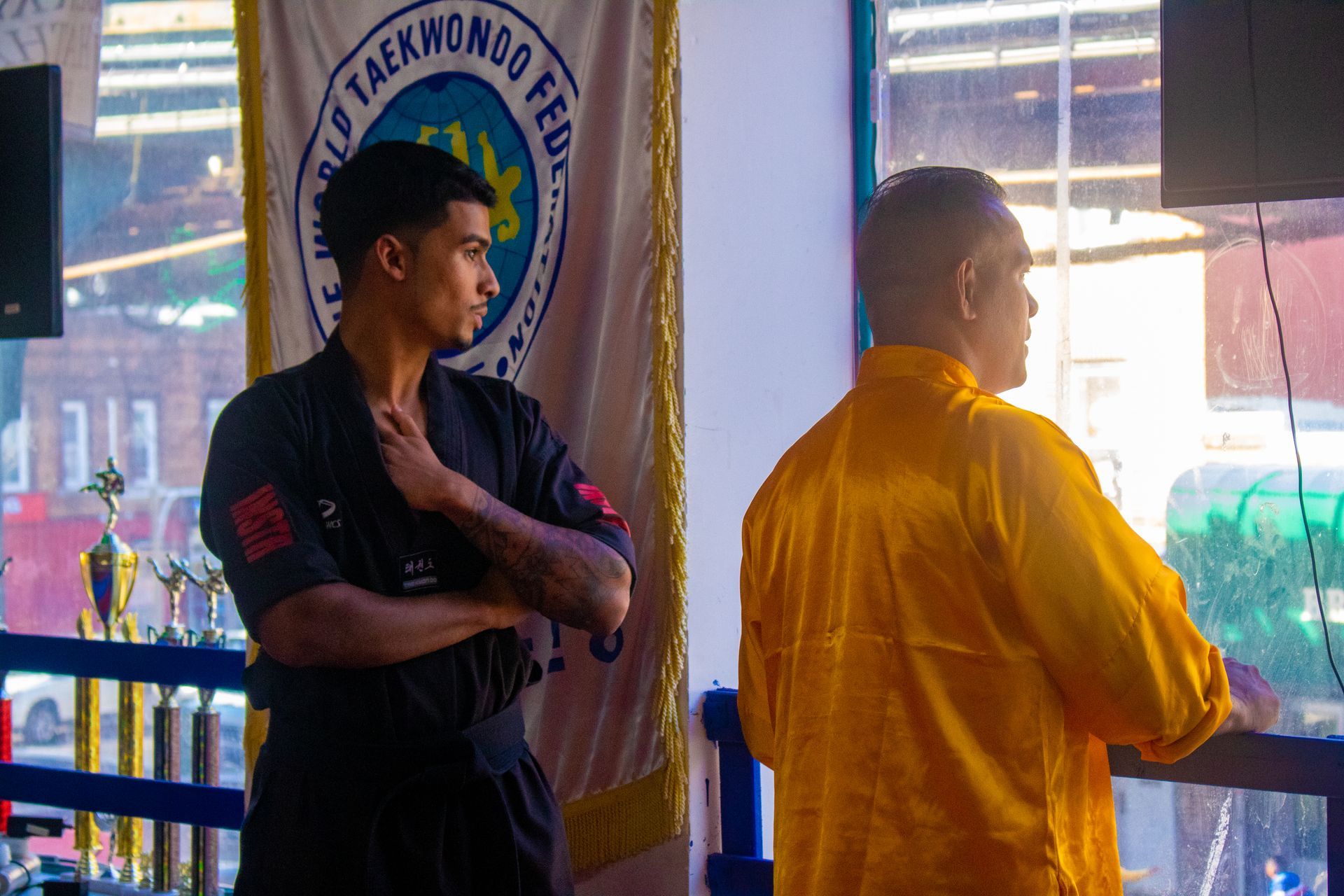
Safe training is not about being fearless, it is about learning the right way, in the right order, with the right supervision.
If you are new to Mixed Martial Arts, it is normal to wonder if you are stepping into something risky. You have probably seen highlight reels that make MMA look like nonstop chaos, and you might be asking a practical question: Is this safe for beginners, or is it only for people who already know how to fall, roll, and defend themselves?
Our answer is straightforward. Mixed Martial Arts can be a very safe beginner activity when you train with structure, supervision, and a smart pace. In fact, most beginner concerns come from myths about what training looks like day to day, not from the reality of how good coaching manages risk.
In South Richmond Hill, NY, we see a lot of adults and families looking for a disciplined, positive fitness outlet that also teaches real skills. So let’s clear up the biggest misconceptions, share what the research actually suggests, and explain how we keep training beginner-friendly from your first class forward.
What “safe” really means in Mixed Martial Arts
Safety is not the absence of contact. Safety is a system: coaching, controlled intensity, good training partners, appropriate gear, and progressions that match your skill level. When you hear “MMA injuries,” it helps to ask one more question: Injuries where, and at what level?
Across studies, many injuries in MMA are soft tissue issues, not catastrophic events. Common examples include lacerations, abrasions, contusions, strains, and sprains. Those are still annoying, of course, but they are typically manageable and preventable with good habits like warmups, technical drilling, and not rushing into hard sparring.
It also matters that training is where most injuries happen. Research estimates roughly 78 percent of injuries occur during training compared to about 23 percent during competition. That might sound surprising until you realize training is where people spend most of their time, and it is also where beginners may move awkwardly before technique settles in.
Myth 1: Mixed Martial Arts is automatically more dangerous than other sports
This myth sticks around because MMA looks intense from the outside. But risk is about exposure and rules, not just appearances. When you account for how often people train, the injury profile of MMA is comparable to many contact sports and in several ways can be managed well because training is highly structured.
Rules also matter. Modern MMA uses unified rules that reduce the most dangerous behaviors, and youth programs tend to be even more conservative. The end result is that safe training is not a lucky outcome, it is the goal built into how we teach.
One useful comparison involves head trauma. Boxing has a higher knockout rate than MMA in published data, with MMA showing about a 4.2 percent knockout rate compared to 7.1 percent in boxing. That does not mean head impacts are “no big deal,” but it does challenge the idea that MMA is automatically the worst option.
Myth 2: Beginners get hurt the most
Beginners often assume that stepping on the mats equals immediate sparring. In reality, beginner injury rates are generally lower than advanced levels and lower than competition contexts. Data comparing amateurs and professionals in competition shows amateurs around 30.4 injuries per 100 athlete-exposures versus about 59 for professionals. The more advanced the intensity and the higher the stakes, the more risk rises.
In day-to-day training, the biggest beginner risk is not “MMA is too dangerous.” The biggest risk is doing too much too soon, especially if your body is not yet adapted to grappling positions, balance changes, and defensive movement. That is exactly why we teach foundations first and scale contact carefully.
In our beginner classes, you spend more time learning how to move than trying to “win.” The win is leaving class feeling better coordinated than you walked in, not collecting bruises.
Myth 3: You have to spar right away to learn Mixed Martial Arts
You do not. You can build real skill through drilling, pad work, positional grappling, and controlled partner exercises long before you ever choose to spar. Sparring has a place, but it should be earned through competency, not forced by ego or peer pressure.
A practical beginner timeline often looks like this:
- First phase: posture, footwork, basic strikes on pads, basic grappling positions, safe falling mechanics
- Second phase: controlled partner drills with clear goals and low intensity
- Third phase: optional, supervised sparring with rules that match your level
This gradual progression is one of the simplest ways to reduce risk, especially for people who are new to contact sports or returning to exercise after time off.
Myth 4: MMA is unsafe for kids and teens
Parents are right to ask hard questions. Youth training needs guardrails, and we take that seriously. While pediatric-specific MMA injury data is still limited, existing findings suggest risk rises with higher weekly training volume and with low experience in grappling contexts. One youth-focused data point showed that training more than 3 hours per week early on can increase risk, roughly doubling with each additional 2 hours.
That is why we focus on fundamentals, coordination, and controlled partner work, not “toughness.” Youth programs should emphasize learning, discipline, and confidence without stacking excessive intensity.
We also pay attention to concussion risk factors. One study noted concussions were higher among the least experienced grapplers, which points to a simple truth: technique and supervision are protective. When you learn to frame, posture, and escape safely, your head is less likely to take unnecessary impact.
Where injuries actually happen, and what they usually look like
Most training injuries are minor and often connected to predictable issues: poor warmups, fatigue, messy technique, or rushing into live rounds. The most common injury categories in MMA include:
- Lacerations and abrasions, often from incidental contact or friction
- Contusions, the classic bruises from learning new movement patterns
- Strains and sprains, commonly from overreaching or twisting under load
Lower extremity injuries are also common, with some research noting lower body injuries outpacing upper body ones. That tracks with what we see in real training: footwork, pivots, takedown entries, and balance battles can stress ankles, knees, and hips if mobility and technique are not ready yet.
The good news is that this is exactly the kind of risk we can reduce with coaching and progression. We cue mechanics, we watch intensity, and we correct the small things before they become big problems.
How we make Mixed Martial Arts beginner-safe in South Richmond Hill, NY
Beginner safety is not one trick. It is a handful of habits stacked together, class after class. We keep training approachable by setting clear expectations, limiting chaos, and focusing on technical clarity. You should never feel like you got thrown into the deep end and told to figure it out.
Here are the core safety pillars we build into our beginner experience:
• Supervised instruction with real-time corrections, so you do not repeat risky mistakes for weeks
• Gradual contact progression, where you earn intensity through consistent control
• Partner selection and pacing, because the right training partner matters more than raw athleticism
• Warmups that prepare joints and tissues for grappling and striking movement
• Protective gear and rules that fit the drill, including conservative intensity for new students
Protective equipment can meaningfully reduce injuries, with some findings showing reductions up to around 40 percent depending on context and compliance. Gear is not a magic shield, but paired with good coaching, it makes training more forgiving while you learn.
What a safe beginner progression can look like
If you are the kind of person who likes a simple roadmap, we use one. The specifics vary by student, but the structure stays consistent: learn the movement, then learn control, then add complexity.
1. Weeks 1 to 4: Build base skills
You learn stance, footwork, basic striking mechanics on pads, fundamental grappling positions, and how to move on the mats without panic.
2. Weeks 5 to 8: Add positional resistance
You start working from set positions with clear constraints, like controlled escapes or light clinch drills, where safety and technique matter more than speed.
3. Months 3 and beyond: Introduce optional sparring pathways
If your goals include sparring, we guide you into it with rules, protective gear, and intensity limits that match your level.
This is also where we see confidence show up in a quiet way. Your breathing gets calmer. Your posture changes. You stop bracing for impact that never comes because you are finally in control of the exchange.
Beginner tips that reduce risk right away
Small choices make a big difference in how your body feels after class. If you want to train consistently, consistency has to be comfortable enough to maintain.
A few habits we recommend from day one:
- Show up a few minutes early so you can warm up without rushing
- Tell us about old injuries, tight joints, or recent surgeries so we can modify safely
- Prioritize technique over intensity, especially when you feel tired
- Keep your weekly volume reasonable at first, then build gradually
- Wear appropriate gear and keep nails trimmed to reduce cuts and scratches
This is not about being delicate. It is about training like someone who plans to be here next month, not just next class.
How Mixed Martial Arts safety compares to “just working out”
A lot of beginners assume a regular gym is automatically safer. Sometimes it is, but sometimes it is not. Poor lifting form, inconsistent coaching, and ego-driven training can cause plenty of injuries too. What we like about MMA training is that it can be coached in real time, with constant feedback, and your progress is measurable in movement quality, not just weight on a bar.
You also get a broader set of physical benefits than many single-modality workouts:
- Improved coordination and balance through footwork and grappling movement
- Joint resilience from controlled ranges of motion
- Conditioning that builds in layers, without needing to sprint every day
- Stress management, because focused training is mentally grounding
And yes, you learn practical self-defense concepts, but we keep it anchored in fundamentals, not fantasy.
A quick note on youth Mixed Martial Arts in Richmond Hill
When families ask about youth Mixed Martial Arts Richmond Hill programs, the safety conversation changes slightly. Kids are still developing, and the goal is skill-building, not punishment. We keep youth classes structured, positive, and progression-based, and we encourage families to start with a sustainable weekly schedule rather than stacking too many hours too soon.
If your child is brand-new, we would rather see clean technique twice a week than sloppy intensity five times a week. Confidence grows faster that way, and it looks better in everyday life too: posture, focus, listening skills, and follow-through.
Take the Next Step
If you are considering Mixed Martial Arts but you want to start carefully, that is a good instinct, and it is exactly how we like to train. At Universal Mixed Martial Arts, we treat beginner safety as part of the curriculum, not a side note, using structured progressions, supervised coaching, and training habits you can stick with.
If you are in South Richmond Hill and looking for Mixed Martial Arts Richmond Hill, NY classes that respect your starting point, we are ready to help you build skills step by step at Universal Mixed Martial Arts, whether you are an adult beginner or you are exploring a youth track for your family.
New to MMA or martial arts? Start your journey by joining a Mixed Martial Arts class at Universal Mixed Martial Arts.