
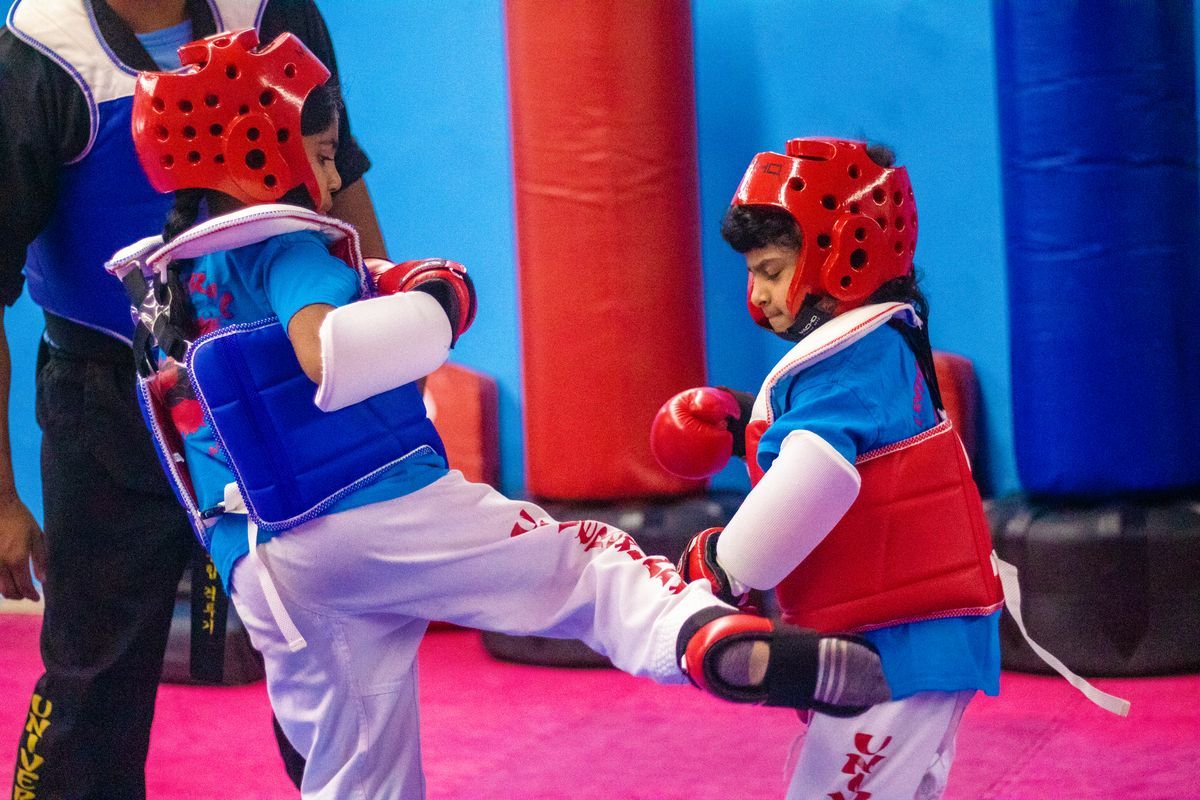
Mixed Martial Arts turns “what if” into “I’ve trained for this” with skills you can actually use under pressure.
Mixed Martial Arts is often seen as a sport, but in real life, what matters most is what you can do in a stressful moment: stay aware, move well, protect yourself, and get to safety. That is exactly why we teach training that connects technique to everyday situations you might face around South Richmond Hill, on the commute, or just running errands.
We also keep it practical. Real-world self-defense is not about collecting flashy moves. It is about fundamentals that hold up when your heart rate spikes: distance, balance, composure, and simple options to create an exit. Over time, that kind of practice changes how you carry yourself, how you read your surroundings, and how quickly you can respond if something feels off.
In this guide, we will break down how Mixed Martial Arts builds everyday self-defense skills, why functional training transfers so well to daily movement, and what you can expect when you start training with us in Mixed Martial Arts Richmond Hill, NY.
Why Mixed Martial Arts translates to real-world self-defense
A lot of workouts build fitness, and some martial arts build technique, but everyday self-defense needs both at the same time. Mixed Martial Arts blends striking, clinch work, grappling, conditioning, and footwork in one training system, so your body learns to solve problems while moving, breathing, and staying balanced. That matters because real confrontations are messy, close-range, and rarely happen when you feel “ready.”
Another major advantage is exposure to pressure in a controlled way. Partner drills and light sparring help you practice timing, distance, and decision-making while someone else is moving and reacting. We do this progressively so you can build confidence without being thrown into the deep end. The goal is simple: when stress shows up, your mind does not shut off and your body does not freeze.
The hidden foundation: awareness, distance, and calm decisions
Self-defense starts long before contact. We treat situational awareness as a skill you can practice, not just a slogan. When you train regularly, you begin noticing spacing, blind spots, and body language more naturally. You also get better at trusting that quiet internal “something is not right” signal and adjusting early.
Distance management is part of that awareness. In class, you learn what safe distance looks like, how quickly someone can close space, and how footwork changes the whole situation. Even small habits like stepping off-line, keeping your hands in a natural ready position, and not letting yourself get cornered can make a meaningful difference.
Just as important, we train you to stay calm enough to choose the best option. Sometimes that option is leaving. Sometimes it is verbal boundaries. Sometimes it is physical action to protect yourself long enough to escape. Mixed Martial Arts supports all of that because it teaches you to think while moving.
Functional movement that shows up everywhere
One reason Mixed Martial Arts feels so “real” is that it is functional training by design. You are not only lifting or only doing cardio. You are learning to move your body as a connected system: hips, core, posture, and balance working together.
That carries over into everyday life in surprisingly practical ways. You may notice you feel steadier going up subway stairs, more stable carrying groceries, or less tense in your shoulders after long workdays. And when it comes to self-defense, that stability matters because losing balance is often the first step toward losing control of a situation.
We also train mobility and flexibility alongside strength and conditioning. Self-defense is not just “being strong.” It is being able to turn, sprawl, frame, stand up, and create space without getting stuck.
Striking skills for creating space, not chasing a fight
Striking in Mixed Martial Arts is not about trading punches in the street. For everyday self-defense, striking is often about creating a moment of space so you can exit. We focus on clean basics that work under pressure: stance, guard, straight punches, simple kicks, and knees and elbows when range gets tight.
We also teach defensive habits that are easy to forget when adrenaline hits, so we drill them until they feel natural. Keeping your chin tucked, returning your hands to guard, and moving your feet while you strike can be the difference between staying safe and getting overwhelmed.
Because everyone starts at a different level, we scale intensity and complexity. You might begin with bag work and controlled partner drills before you ever do a more dynamic round. The goal is to build skill and confidence, not collect bruises.
Clinch control: where everyday confrontations often happen
A lot of real-world incidents start close: a shove, a grab, an argument that collapses into clinching distance. That is why clinch training is such a big deal in Mixed Martial Arts. In the clinch, you learn how to control posture, fight for inside position, and stop someone from pulling you off balance.
We spend time on pummeling drills, underhooks, head position, and how to frame and turn out when someone crowds your space. This is also where emotional control shows up. When another person is physically pushing into you, it is easy to panic. Clinch training gives you a calmer “map” of what to do: stabilize, protect yourself, improve position, and get out.
For commuters and busy adults in Queens, this is one of the most reassuring parts of training. You are not relying on perfect timing from a distance. You are learning what to do when it is already close.
Grappling and escapes: getting back to your feet safely
Grappling is one of the reasons Mixed Martial Arts is so effective for self-defense. If you get grabbed, pulled down, or end up in a scramble, you need options that do not depend on being bigger or stronger. We teach escapes, frames, and positional awareness so you can protect yourself and work back to a safer position.
A core principle we reinforce is this: in everyday self-defense, getting back to your feet is often the priority. Ground skills are not about “staying down there to win.” They are about survival, protection, and standing up when you can. That includes learning to shrimp, bridge, recover guard, build a base, and stand with posture and awareness.
We also train you to stay composed when breathing gets hard. Grappling pressure can feel intense at first, but steady exposure in a safe environment helps your nervous system adapt. Over time, that “I can’t handle this” feeling fades, and you start thinking clearly again.
Takedown defense and balance when someone tries to overwhelm you
Takedown defense is a practical layer of self-defense training because it connects directly to balance, base, and awareness. We teach you how to widen your stance, lower your center of gravity, and use hips and frames to resist being driven backward or pulled down.
You will also learn the sprawl and how to circle out, plus how to use underhooks and head position to stay upright. These skills are not only for the cage. They are body mechanics that help you keep your footing when someone bumps you, grabs your clothing, or tries to control where you go.
Just as important, we train you not to overreact. When you feel pressure, you do not want to stiffen up and gas out in five seconds. We coach you to breathe, find your base, and make small corrections that add up.
Confidence under pressure: the mental side that changes everything
Self-defense is partly physical, but it is also mental. Consistent training builds confidence because you earn it through repetition. You see yourself improve. You learn that hard things are manageable when you keep showing up. And that mindset tends to spill into everyday life, from work stress to social situations.
In our classes, you also practice communication and respect through partner work. You learn how to set boundaries, how to work with different training partners, and how to stay emotionally steady when something feels challenging. That matters for adults and for teens, because confidence without control is not the goal. Calm confidence is.
Stress management is another real benefit. Training gives you an outlet, sure, but it also teaches you how to function while tired, while breathing hard, and while your brain is trying to hurry you. That is a skill you can use anywhere.
Youth training in a family-focused Queens neighborhood
For parents looking at Youth Mixed Martial Arts Richmond Hill options, the real question is usually bigger than technique. You want structure, coaching, and a place where your child can build confidence and discipline while staying active. We get that, and we take it seriously.
Youth training blends age-appropriate technique with habits that support school and home life: listening, focus, effort, and respect. We also teach practical awareness in a way that is not fear-based. Kids learn to recognize personal space, use their voice, and respond appropriately if another child grabs, pushes, or tries to intimidate.
Over time, many parents notice the small wins first: better posture, more willingness to try hard things, and improved self-control when frustration shows up. Those are life skills, not just gym skills.
What to expect in your first class
Starting something new can feel intimidating, especially when the words Mixed Martial Arts are involved. We keep the first experience simple and welcoming, and we coach you step-by-step so you always know what you are doing and why you are doing it.
Here is what a typical first class experience looks like with us:
1. You check the class schedule, pick a level-appropriate time, and arrive a bit early to get oriented.
2. We review basic safety guidelines, class flow, and how to work with a partner respectfully.
3. You learn foundational movement like stance, footwork, and simple defenses before adding any intensity.
4. You practice techniques through controlled drills, with coaching and plenty of resets if you need them.
5. You leave with a clear idea of next steps, including how often to train based on your goals and schedule.
Wear comfortable athletic clothes, bring water, and come ready to learn. You do not need to be “in shape” to start. Training is how you build that base.
How often should you train for real progress?
Consistency beats intensity almost every time. If your goal is everyday self-defense, two to three classes per week is a realistic sweet spot for most adults. That is enough repetition to improve technique, timing, and conditioning without burning out. If you can only train once a week, we can still help, but progress will feel slower, especially with skills that rely on timing and partner reaction.
For youth students, frequency depends on age, school workload, and attention span. Many families start with one or two classes weekly and build from there once the routine feels comfortable.
No matter your schedule, what matters is showing up regularly, asking questions, and letting the basics get sharp. In Mixed Martial Arts, the “simple” skills are the ones you rely on when it counts.
Take the Next Step
Building real-world self-defense is not about becoming aggressive. It is about becoming prepared: aware of your surroundings, confident in your movement, and capable of protecting yourself long enough to leave. That is the kind of training we deliver every day, with a clear progression for beginners and meaningful challenges as you grow.
If you want a place in South Richmond Hill where Mixed Martial Arts is taught with practical carryover to everyday life, we are ready to help you start. At Universal Mixed Martial Arts, our classes are designed to build skill, composure, and fitness in a way that fits real people and real schedules.
Improve your strength, endurance, and self-defense skills by joining a mixed martial arts class at Universal Mixed Martial Arts.