
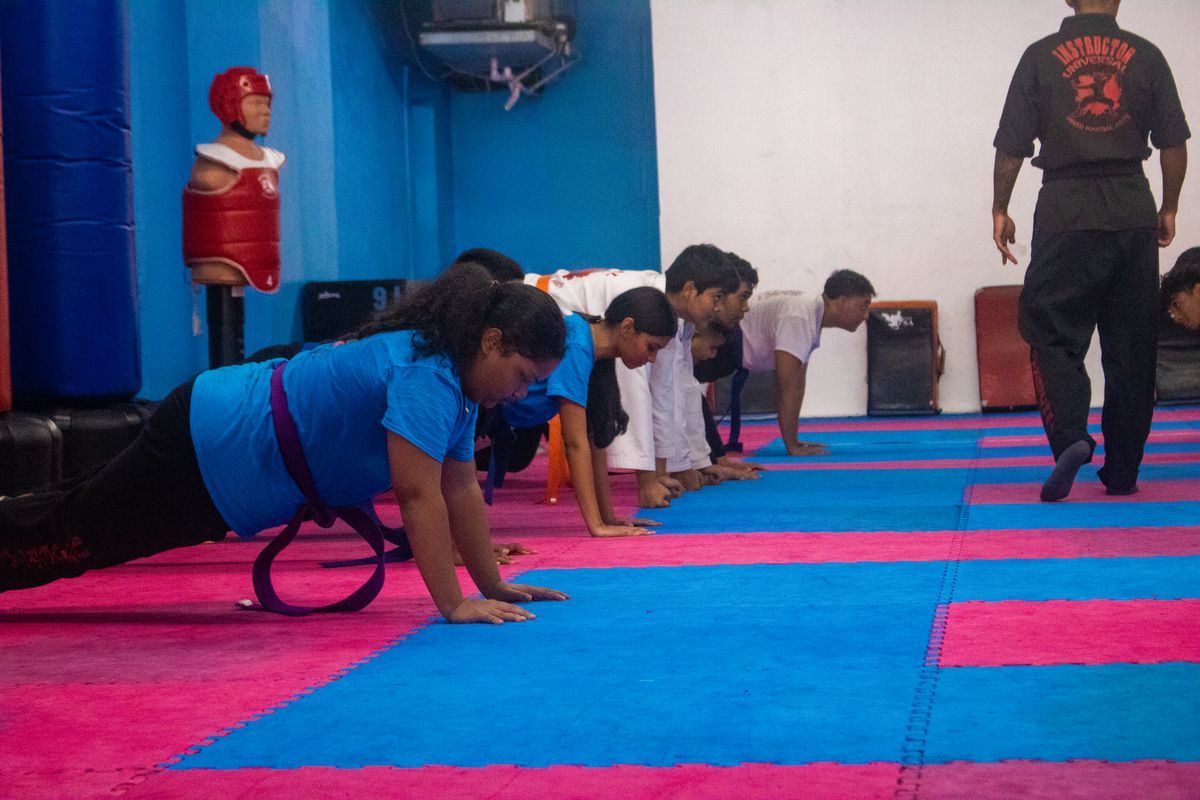
Mixed Martial Arts can train attention the same way it trains technique: through structure, repetition, and calm pressure.
School focus is not just about wanting to concentrate. For a lot of students across New York, focus breaks down when stress is high, instructions feel scattered, or distractions pile up right after the school day ends. We see it all the time: a student starts strong, then drifts when something feels frustrating or boring, and suddenly homework takes twice as long as it should.
This is one reason Mixed Martial Arts training has become such a powerful after-school tool. Beyond fitness and self-defense, modern research increasingly links martial arts participation with improvements in attention, working memory, inhibitory control, executive function, and self-regulation in children and adolescents. In plain terms, that means students often get better at staying on task, stopping impulses, and resetting after a tough moment.
In our South Richmond Hill programs, we build those skills the same way we build athletic skills: with clear coaching, consistent routines, and age-appropriate challenges that reward patience and effort. Over time, the habits in class can show up at school in a very practical way: listening the first time, following multi-step directions, and staying steady under pressure.
Why focus is a trainable skill, not just a personality trait
A lot of people talk about focus as if you either have it or you do not. We approach it differently. Focus is a skill set made up of smaller skills: noticing where your mind goes, bringing it back, and staying calm enough to keep trying. Those are teachable, and martial arts training naturally rehearses them.
Recent reviews and studies back this up. A 2026 scoping review of typically developing children and adolescents reported improvements in attention, resilience, self-efficacy, stress, self-confidence, and even academic performance among youth participating in martial arts. A 2021 study found better inhibition, shifting, and processing speed, which are key parts of executive functioning. A 2026 randomized trial also reported stronger gains in attentional processing, emotion regulation, stress reduction, and executive inhibitory control compared with conventional exercise.
We like these findings because they match what we coach every day. In class, students practice controlling their bodies, then controlling their reactions, and then controlling their attention. It is a progression, and it tends to stick because it is practiced, not just talked about.
The science in parent language: what “executive function” looks like in real life
Executive function can sound like something out of a textbook, but you see it in everyday student moments. It is the difference between a student who can pause before blurting something out and a student who cannot. It is the ability to switch from play mode to homework mode without an argument. It is also the ability to keep working when the first attempt is not perfect.
When martial arts training improves inhibition, working memory, and cognitive flexibility, those gains can translate into school behaviors such as:
• Remembering a teacher’s instructions long enough to follow them
• Waiting a turn without melting down
• Switching between subjects with less resistance
• Handling correction without shutting down
• Staying engaged through repetition, like reading practice or math drills
Mixed Martial Arts is especially useful here because it blends structure with variety. Students drill fundamentals, but class still feels active and mentally engaging. That balance matters for students who struggle with boredom, restlessness, or overthinking.
How our classes build focus, one round at a time
We coach focus as a process, not a pep talk. Students do not hear “pay attention” and magically change. Instead, we set up a training environment where paying attention becomes the easiest path to success. When students know the routine, understand the goal of a drill, and get immediate feedback, attention starts to sharpen.
A typical class format supports this naturally. We move from warm-ups to technique to controlled practice, and the transitions are consistent. Students learn to listen for cues, watch demonstrations, and apply a correction on the next rep. That sounds simple, but it is a serious mental workout. It is attention plus action, repeated.
This is also why the “after-school brain” responds well to training. Students come in with energy, frustration, or a little mental fog, and the class gives that energy a clear channel. By the end, students often look calmer and more organized, even if the workout was intense.
How martial arts helps students stay focused after school
After school, many students hit a wall. The day has already demanded sitting still, listening, and navigating social pressure. At home, it can turn into a cycle: snack, screens, half-done homework, and a stressed evening. A structured class can break that pattern.
Training creates a clean line in the day: school ends, training begins, and the student has a job to do. There is a uniform expectation in the room: show respect, follow instructions, keep trying. That routine can make homework time easier because the student has already practiced self-control and task focus in a physical way.
Here are a few focus habits we intentionally reinforce in class:
• Listening first, moving second, so students learn to slow down before acting
• Finishing the round, even when it feels hard, to build persistence
• Breathing and resetting between drills, which supports emotional control
• Accepting feedback quickly, without a long argument, so corrections become normal
• Showing respect to partners, which improves patience and self-awareness
These are not abstract character traits. Students practice them every time the coach calls for attention, every time a drill changes, and every time a partner match-up requires control.
Youth training that feels safe, structured, and beginner-friendly
Parents often hear “MMA” and picture something rough. We understand that reaction. Our youth classes are structured, supervised, and built around skill development, not chaos. Beginners are welcome, and our coaching emphasizes control, technique, and respect.
Safety is not just gear and rules, although those matter. Safety is also progression. We introduce skills in a way that matches age and experience, and we keep expectations clear. Students build confidence without being thrown into situations that feel overwhelming.
We also pay close attention to how students handle pressure. If a student tends to rush, we coach pace. If a student freezes, we coach simple next steps. That individualized attention can be a big reason students become more focused over time, because training feels manageable and consistent.
What makes Mixed Martial Arts different from traditional martial arts for focus
Traditional martial arts can be excellent for focus, and we respect that. Our approach, though, has a specific advantage for many students: variety within a structured system. Mixed Martial Arts training blends striking, clinch work, grappling, movement, and conditioning. That variety keeps students engaged while still requiring discipline.
Focus improves when students care about what they are doing. Many kids and teens light up when the class feels practical and skill-based. The drills have clear purpose, and progress feels real. When students can see themselves improving, attention tends to follow.
At the same time, MMA-style training demands self-control. Students learn quickly that technique beats wild effort. That lesson alone is a focus upgrade: slow down, notice details, adjust, and try again.
How often should a student train to see focus benefits?
Consistency matters more than intensity. Research on youth martial arts and cognitive outcomes typically reflects regular participation over time, not occasional drop-ins. In our experience, students who train on a reliable schedule build habits faster: showing up, listening, managing frustration, and finishing tasks.
Most families do well starting with a steady weekly routine and then adjusting based on the student’s energy and school workload. If your student is new, we would rather see consistent attendance at a manageable pace than a burst of training followed by burnout.
To keep it realistic, we also recommend tying training to your weekly rhythm. If you can match class days to the same homework planning routine, students often feel less scattered. It becomes normal: school, training, dinner, homework. No mystery, no debate.
Focus, stress, and confidence: why calm matters for learning
A student can be smart and still struggle to focus if stress stays high. Stress narrows attention and makes small frustrations feel huge. That is one reason the 2026 randomized trial findings about emotion regulation and stress reduction are so interesting: better emotional control supports better attention.
In training, students experience manageable stress on purpose. A timed round, a new technique, a partner drill, a tougher warm-up. Then we coach them through it. They learn to breathe, listen, and keep moving. Over time, the nervous system gets better at staying steady.
Confidence is part of this, too. When students feel capable, they are less likely to avoid hard tasks. That can show up at school as improved participation, better follow-through, and more willingness to ask for help instead of shutting down.
What parents in South Richmond Hill, NY often want from after-school training
Families in South Richmond Hill are busy. Between school pick-ups, homework, and commuting, after-school activities have to be practical and worth the time. We keep our class schedule clear, and we focus on making each class feel purposeful from the moment students step onto the mats.
Parents also want an environment where students can be challenged without being judged. We take that seriously. Our coaching style is firm but supportive, and we aim to make progress visible. When students notice improvement, they usually bring a little more focus everywhere else.
If you are looking specifically for Youth Mixed Martial Arts Richmond Hill, our goal is to give you a program that supports the student you have right now, whether your child is energetic, shy, easily distracted, or already athletic and just needs structure.
FAQ: focus, safety, and getting started
Can martial arts really help my child focus better in school?
It can. Studies have linked martial arts participation with improvements in attention, inhibitory control, and broader executive functioning, and those skills connect directly to classroom behaviors like listening, staying seated, and completing work.
What age should a child start?
It depends on readiness more than a specific number. If your child can follow basic instructions, participate safely in a group, and handle simple coaching, we can usually start building fundamentals right away.
Is MMA safe for beginners and younger students?
Yes, when classes are structured and supervised with age-appropriate progression. We emphasize control, technique, and clear rules, and we match intensity to experience.
Will training help with discipline or ADHD-related attention issues?
Many families report improvements in routines and self-control, and research on martial arts and ADHD-related attention outcomes suggests potential benefits in attention, working memory, and inhibitory control. We always recommend partnering with your child’s healthcare and school support team when attention challenges are significant.
How do I know if my child will be a good fit?
If your child benefits from structure, movement, and clear expectations, training is often a strong match. A trial class is usually the easiest way to find out, because you can see how your child responds to the environment and coaching.
Take the Next Step
Building focus is rarely about one magic trick. It is about practicing attention, self-control, and emotional balance often enough that it becomes a normal way of operating. Mixed Martial Arts training does that in a hands-on, practical way, and the benefits can reach into school, homework time, and everyday decision-making.
When you are ready to explore that process in South Richmond Hill, Universal Mixed Martial Arts offers structured youth and teen training built around confidence, discipline, focus, fitness, and real self-defense, with a supportive pace for beginners.
Ready to train? Join a martial arts class at Universal Mixed Martial Arts today.